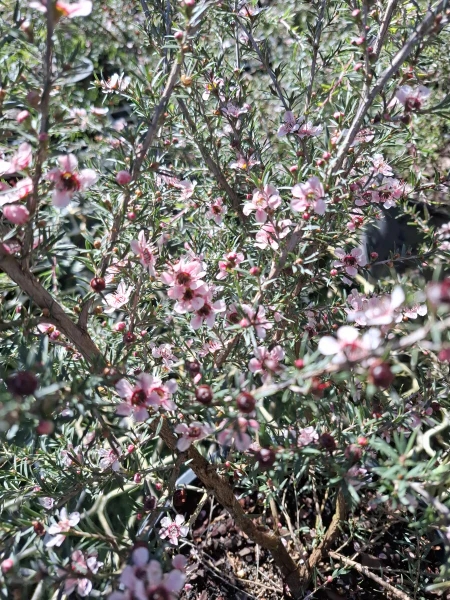
Leptospermum Pink Cascade
Leptospermum "Pink Cascade"
- Mature size: 1m tall x 1-1.5m wide
- Recommended spacing: 1-1.5m apart
- Ideal growing conditions: Full sun/part shade.
- Growth rate: Moderate.
Uses
Pot/container plant, patio/verandah plant, native garden, small gardens, wildflower/cottage garden, rockery, understory planting, garden filler, mass plantings, feature shrub, coastal gardens, erosion control/bank stability, retaining wall.
Noteworthy
Australian Native, hardy evergreen, low maintenance, attracts birds and other pollinators.
Tolerant
Pruning, coastal conditions, Drought and light frost once established, adaptable to a wide range of soil types.
Colour/Growth form
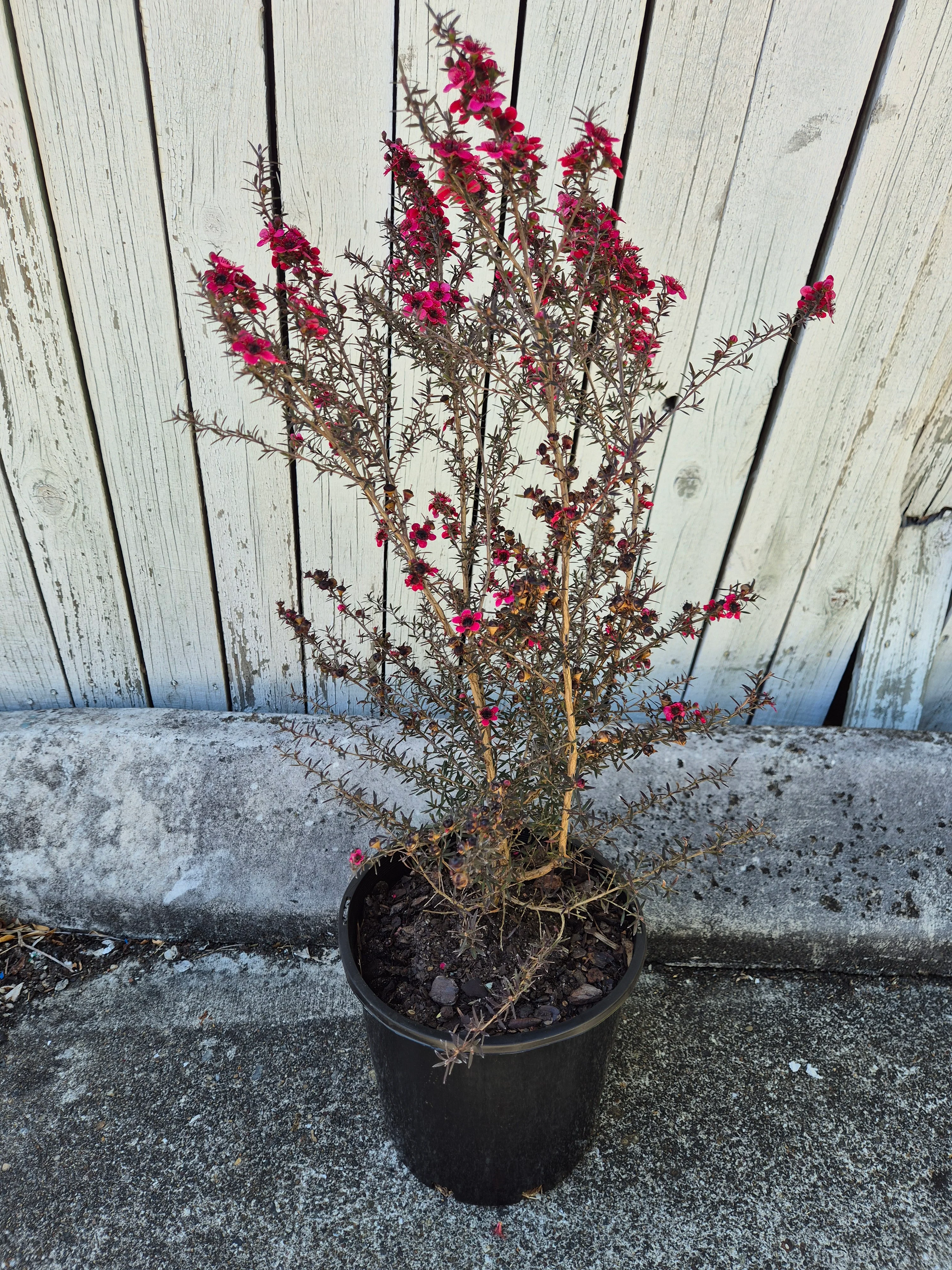
Small light pink flowers, short evergreen shrub, green foliage, weeping/cascading habit.
What is Tea Tree Pink Cascade?
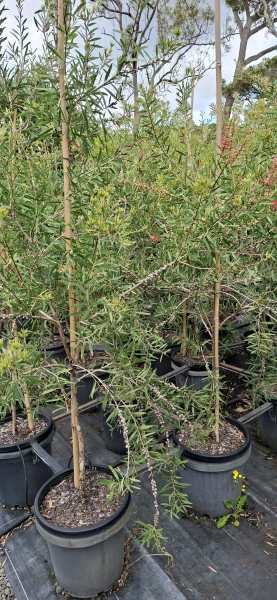
Leptospermum ‘Pink Cascade’, commonly known as Pink Cascading Tea Tree, is a hardy evergreen Australian native shrub valued for its soft pink flowers and weeping growth habit. It develops green foliage with a low, cascading form, making it a great choice for pots, rockeries, native gardens, retaining walls and coastal landscapes.
How to Care for Tea Tree Leptospermum
Caring for Leptospermum involves ensuring they are planted in moist, well-draining soils. Most Leptospermum species prefer sunny spots with adequate airflow, which helps prevent disease. Pruning after flowering can enhance growth and promote lovely blooms from late Winter to Spring.
Leptospermum "Pink Cascade"
- Mature size: 1m tall x 1-1.5m wide
- Recommended spacing: 1-1.5m apart
- Ideal growing conditions: Full sun/part shade.
- Growth rate: Moderate.
Uses
Pot/container plant, patio/verandah plant, native garden, small gardens, wildflower/cottage garden, rockery, understory planting, garden filler, mass plantings, feature shrub, coastal gardens, erosion control/bank stability, retaining wall.
Noteworthy
Australian Native, hardy evergreen, low maintenance, attracts birds and other pollinators.
Tolerant
Pruning, coastal conditions, Drought and light frost once established, adaptable to a wide range of soil types.
Colour/Growth form
Small light pink flowers, short evergreen shrub, green foliage, weeping/cascading habit.
What is Tea Tree Pink Cascade?
Leptospermum ‘Pink Cascade’, commonly known as Pink Cascading Tea Tree, is a hardy evergreen Australian native shrub valued for its soft pink flowers and weeping growth habit. It develops green foliage with a low, cascading form, making it a great choice for pots, rockeries, native gardens, retaining walls and coastal landscapes.
How to Care for Tea Tree Leptospermum
Caring for Leptospermum involves ensuring they are planted in moist, well-draining soils. Most Leptospermum species prefer sunny spots with adequate airflow, which helps prevent disease. Pruning after flowering can enhance growth and promote lovely blooms from late Winter to Spring.
Original: $15.99
-65%$15.99
$5.60Description
Leptospermum "Pink Cascade"
- Mature size: 1m tall x 1-1.5m wide
- Recommended spacing: 1-1.5m apart
- Ideal growing conditions: Full sun/part shade.
- Growth rate: Moderate.
Uses
Pot/container plant, patio/verandah plant, native garden, small gardens, wildflower/cottage garden, rockery, understory planting, garden filler, mass plantings, feature shrub, coastal gardens, erosion control/bank stability, retaining wall.
Noteworthy
Australian Native, hardy evergreen, low maintenance, attracts birds and other pollinators.
Tolerant
Pruning, coastal conditions, Drought and light frost once established, adaptable to a wide range of soil types.
Colour/Growth form
Small light pink flowers, short evergreen shrub, green foliage, weeping/cascading habit.
What is Tea Tree Pink Cascade?
Leptospermum ‘Pink Cascade’, commonly known as Pink Cascading Tea Tree, is a hardy evergreen Australian native shrub valued for its soft pink flowers and weeping growth habit. It develops green foliage with a low, cascading form, making it a great choice for pots, rockeries, native gardens, retaining walls and coastal landscapes.
How to Care for Tea Tree Leptospermum
Caring for Leptospermum involves ensuring they are planted in moist, well-draining soils. Most Leptospermum species prefer sunny spots with adequate airflow, which helps prevent disease. Pruning after flowering can enhance growth and promote lovely blooms from late Winter to Spring.