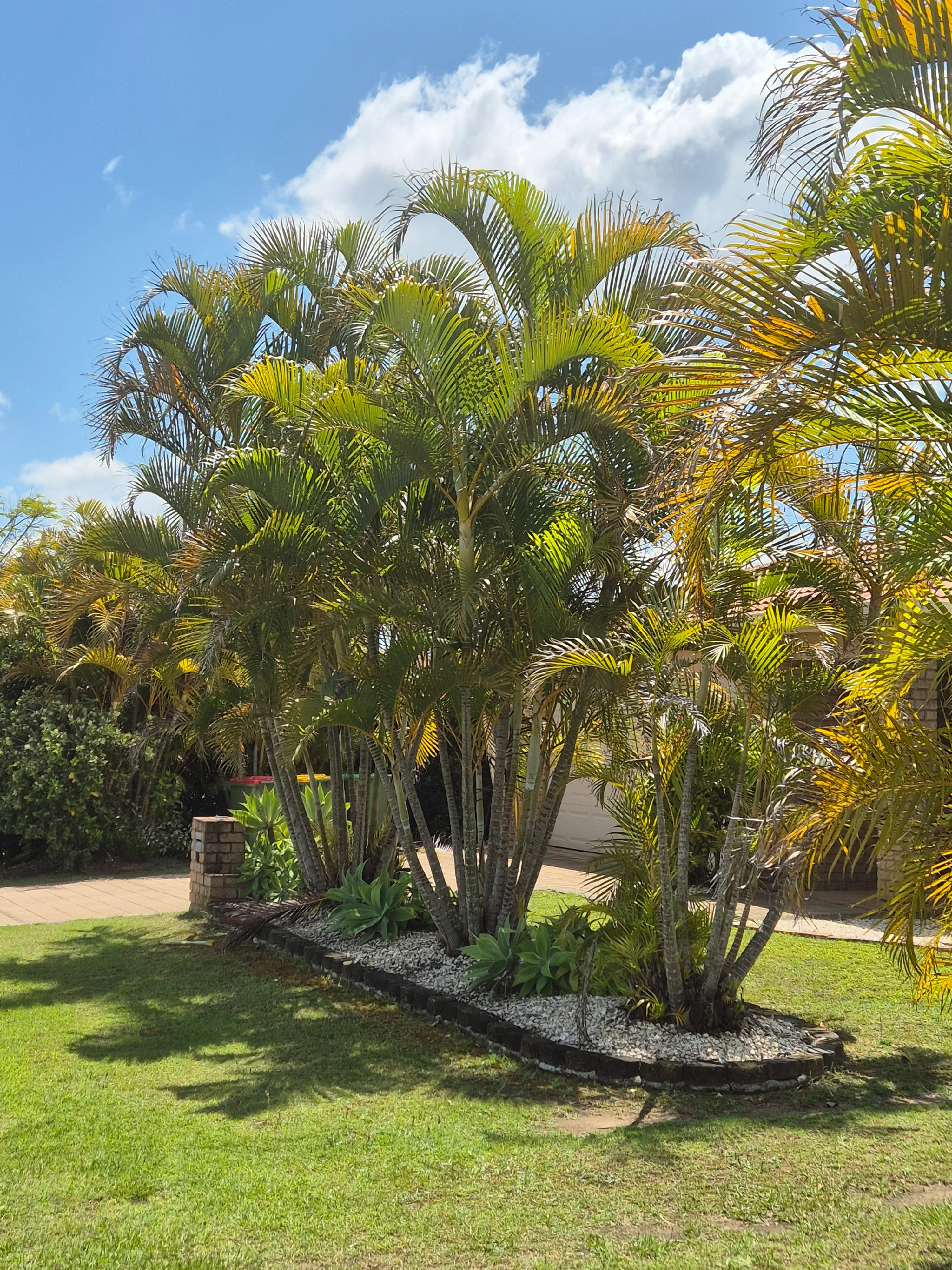
Dypsis lutescens (syn. Chrysalidocarpus lutescens)
Dypsis lutescens 'Golden Cane Palm', 'Golden Palm Tree'
- Mature size: 6m-8m tall when planted outdoors - smaller when left in pots.
- Spacing for screening: 2m apart
- Ideal growing conditions: Full sun to part shade
- Growth rate: Moderate
Tolerant
Moderately drought-tolerant once established, coastal gardens, humidity, adaptable to various soil types.
Noteworthy
Low maintenance, hardy palm tree.
Uses
Large pot/container plant, screening, mass plantings, tropical garden, feature palm tree.
Colour/Growth form
Yellow-green arching fronds with golden-yellow trunks, upright clumping habit.What is a Golden Cane Palm?
Care Tips for Golden Cane Palms
1. Golden Palm trees thrive in full sun to part shade.2. Plant them in larger pots or directly into the soil, ensuring the hole is about 1.5 times the size of the root-ball.
3. Use a slow-release fertiliser or all-purpose fertiliser during the warmer months to promote healthy growth.
4. Golden Cane Palms grow in various soil types but prefer moist, well-drained soil. Water generously but avoid overwatering. Allow the top 5-10cm of soil to dry out slightly between waterings.
5. Prune old fronds and new suckers regularly to maintain shape and encourage strong growth.
Frequently Asked Questions
How do I care for my Golden Cane Palm?
Place the Golden Cane Palm in full sun/direct light and check soil moisture before watering as it prefers well-drained soil. It thrives in warm, humid conditions. Trim any yellow or brown fronds to keep it looking healthy and fresh.How do I prune or maintain the plant’s appearance?
To maintain your Golden Cane Palm’s appearance, remove any yellow or brown fronds by cutting them at the base. Avoid over-pruning, as the plant relies on healthy fronds for growth.What type of soil does a Golden Cane Palm need?
The Golden Cane Palm thrives in well-draining soil that retains some moisture. A mix of potting soil with sand or perlite, and organic matter like compost works well.Dypsis lutescens 'Golden Cane Palm', 'Golden Palm Tree'
- Mature size: 6m-8m tall when planted outdoors - smaller when left in pots.
- Spacing for screening: 2m apart
- Ideal growing conditions: Full sun to part shade
- Growth rate: Moderate
Tolerant
Moderately drought-tolerant once established, coastal gardens, humidity, adaptable to various soil types.
Noteworthy
Low maintenance, hardy palm tree.
Uses
Large pot/container plant, screening, mass plantings, tropical garden, feature palm tree.
Colour/Growth form
Yellow-green arching fronds with golden-yellow trunks, upright clumping habit.What is a Golden Cane Palm?
Care Tips for Golden Cane Palms
1. Golden Palm trees thrive in full sun to part shade.2. Plant them in larger pots or directly into the soil, ensuring the hole is about 1.5 times the size of the root-ball.
3. Use a slow-release fertiliser or all-purpose fertiliser during the warmer months to promote healthy growth.
4. Golden Cane Palms grow in various soil types but prefer moist, well-drained soil. Water generously but avoid overwatering. Allow the top 5-10cm of soil to dry out slightly between waterings.
5. Prune old fronds and new suckers regularly to maintain shape and encourage strong growth.
Frequently Asked Questions
How do I care for my Golden Cane Palm?
Place the Golden Cane Palm in full sun/direct light and check soil moisture before watering as it prefers well-drained soil. It thrives in warm, humid conditions. Trim any yellow or brown fronds to keep it looking healthy and fresh.How do I prune or maintain the plant’s appearance?
To maintain your Golden Cane Palm’s appearance, remove any yellow or brown fronds by cutting them at the base. Avoid over-pruning, as the plant relies on healthy fronds for growth.What type of soil does a Golden Cane Palm need?
The Golden Cane Palm thrives in well-draining soil that retains some moisture. A mix of potting soil with sand or perlite, and organic matter like compost works well.Original: $18.77
-65%$18.77
$6.57Description
Dypsis lutescens 'Golden Cane Palm', 'Golden Palm Tree'
- Mature size: 6m-8m tall when planted outdoors - smaller when left in pots.
- Spacing for screening: 2m apart
- Ideal growing conditions: Full sun to part shade
- Growth rate: Moderate
Tolerant
Moderately drought-tolerant once established, coastal gardens, humidity, adaptable to various soil types.
Noteworthy
Low maintenance, hardy palm tree.
Uses
Large pot/container plant, screening, mass plantings, tropical garden, feature palm tree.
Colour/Growth form
Yellow-green arching fronds with golden-yellow trunks, upright clumping habit.What is a Golden Cane Palm?
Care Tips for Golden Cane Palms
1. Golden Palm trees thrive in full sun to part shade.2. Plant them in larger pots or directly into the soil, ensuring the hole is about 1.5 times the size of the root-ball.
3. Use a slow-release fertiliser or all-purpose fertiliser during the warmer months to promote healthy growth.
4. Golden Cane Palms grow in various soil types but prefer moist, well-drained soil. Water generously but avoid overwatering. Allow the top 5-10cm of soil to dry out slightly between waterings.
5. Prune old fronds and new suckers regularly to maintain shape and encourage strong growth.